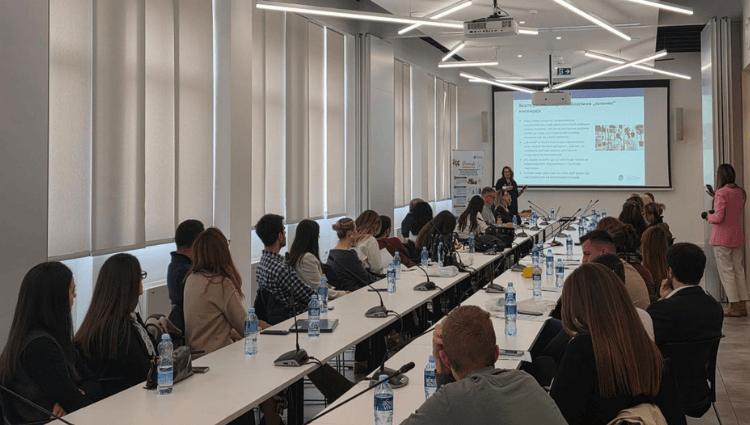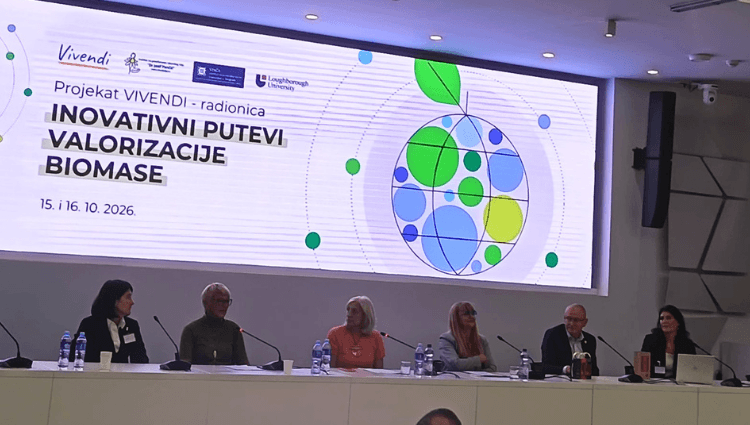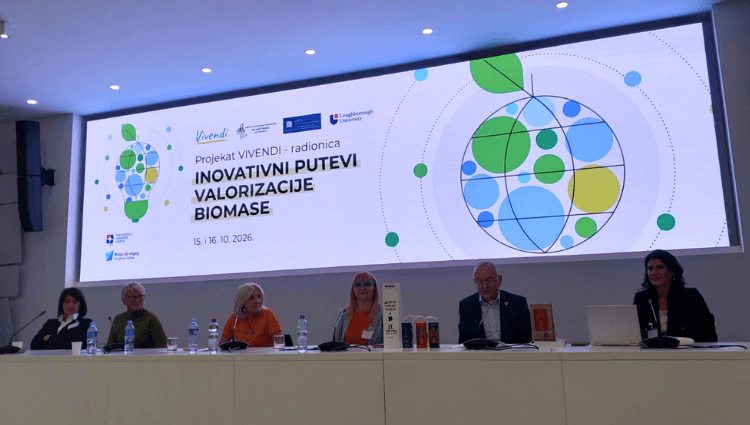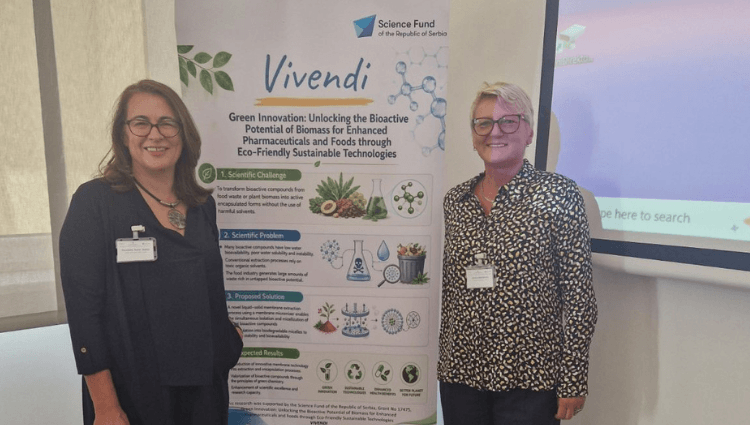



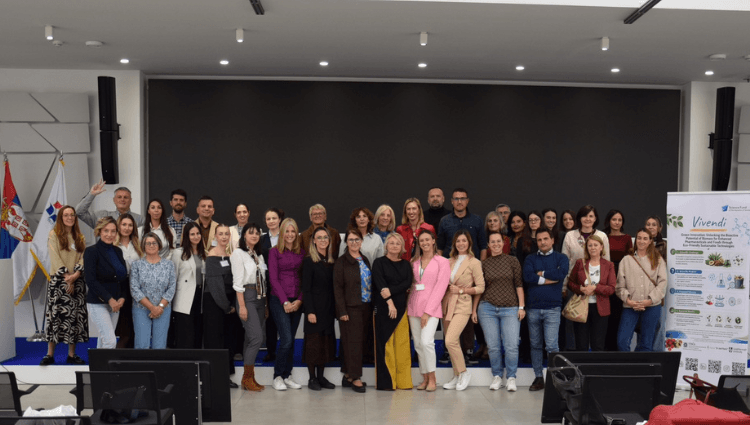
A two-day workshop entitled “Innovative Ways of Biomass Valorization” was held at the Chamber of Commerce and Industry of Serbia on October 15 and 16, 2026, within the framework of the VIVENDI project.
During two sessions on the first day of the workshop, research results and projects carried out at the Vinča Institute of Nuclear Sciences, NOVA University Lisbon, the Faculty of Medicine of the University of Banja Luka, the University of Zagreb Faculty of Food Technology and Biotechnology, the Institute of Molecular Genetics and Genetic Engineering (IMGGE) in Belgrade, and the University of Belgrade – Faculty of Agriculture were presented.
The first day of the programme concluded with a panel discussion in which a representative of the Intellectual Property Office participated. The discussion focused on the importance of intellectual property protection and the need to address intellectual property protection issues at an early stage, already during the implementation of scientific research projects.
On the second day of the workshop, projects and research results were presented by the University of Belgrade – Faculty of Biology, the Faculty of Technical Sciences of the University of Novi Sad, the University of Belgrade – Institute of Chemistry, Technology and Metallurgy (ICTM), the University of Belgrade – Faculty of Chemistry, the Institute for Medicinal Plant Research “Dr Josif Pančić”, IMGGE, the University of Belgrade – Faculty of Agriculture, and the Vinča Institute of Nuclear Sciences.
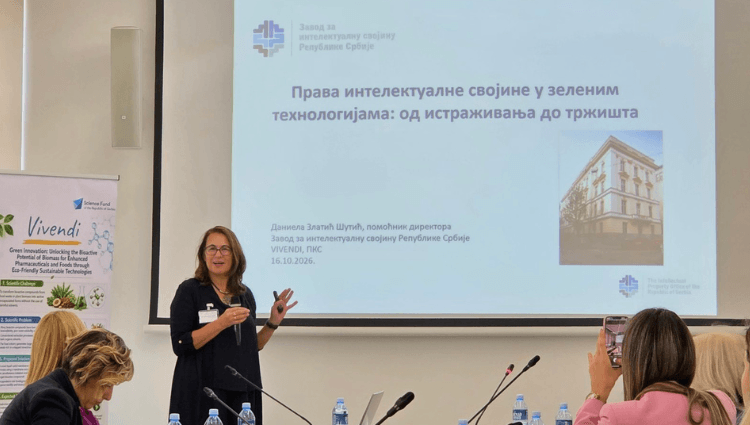
As part of the second day’s programme, a representative of the Intellectual Property Office delivered a lecture on intellectual property rights, with particular emphasis on the field of biotechnology. The importance of linking scientific research with intellectual property protection was highlighted, as well as the opportunities for the commercial application of research results. Particular emphasis was placed on the importance of identifying the potential for intellectual property protection and its role in the further development and practical application of innovative solutions.
During the break between the two sessions on the second day, a poster session was also organised, providing participants with an opportunity to learn more about the research presented.
The high level of interest and the large number of participants confirmed the relevance of the topic of green innovation, as well as the importance of cooperation between scientific research institutions and the Intellectual Property Office in fostering the development and application of innovative solutions.