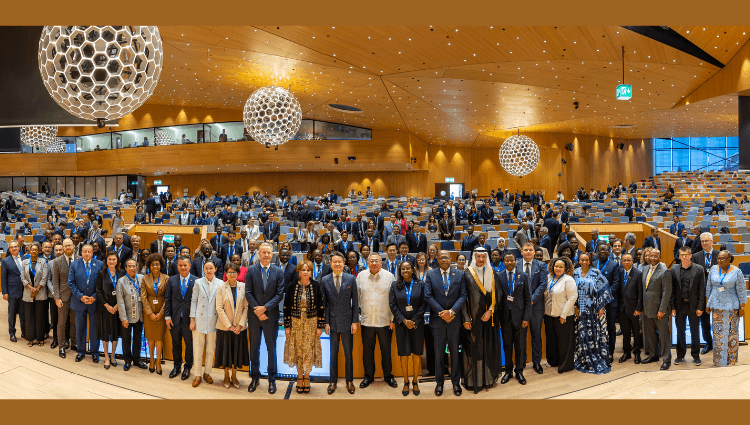



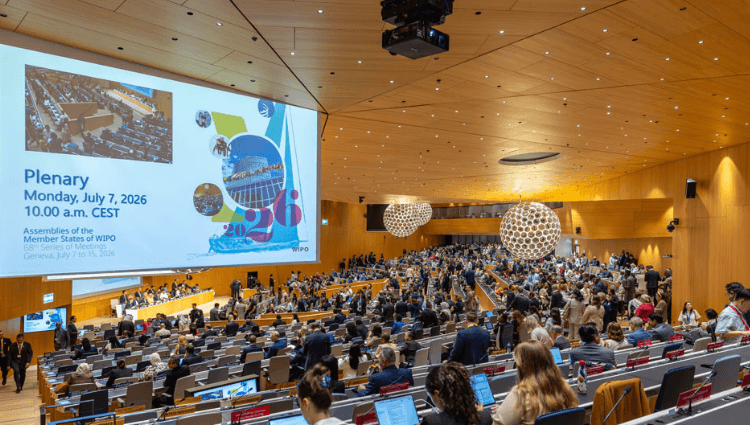
The 68th Series of Meetings of the Assemblies of the Member States of the World Intellectual Property Organization (WIPO) opened yesterday at WIPO headquarters in Geneva and will take place from July 7 to 15, 2026.
The meetings are chaired by Mr. Carlos Sorreta, Ambassador of the Philippines to the United Nations.
Following the opening of the meetings and the adoption of the agenda, Mr. Daren Tang, Director General of WIPO, addressed the participants.
In his opening remarks, Director General Daren Tang emphasized that, despite growing geopolitical tensions, economic uncertainty and the rapid development of artificial intelligence (AI), intellectual property remains a key driver of innovation, economic growth and international cooperation. WIPO provides a forum for multilateral cooperation in which Member States can work together to address current global challenges.
Daren Tang placed intellectual property within a broader historical context. He pointed out that human creativity has existed since prehistoric times. According to him, intellectual property, which was created to reward human creativity and creative endeavour, should not be viewed solely as a legal and technical system for the registration of IP rights, but rather as a mechanism for fostering innovation and promoting human creativity and entrepreneurship as a whole.
The Director General also presented a range of indicators demonstrating the growing importance of intellectual property at the global level. Investment in intangible assets exceeded USD 10 trillion for the first time and is growing more than three times faster than investment in tangible assets. Global trade in intellectual property reached USD 1.2 trillion annually, representing more than a twofold increase compared with 2010. Trade in cultural goods reached a record USD 250 billion, indicating the growing influence of the creative industries worldwide. He particularly highlighted that developing countries, such as India, the Philippines and Brazil, are recording strong growth in investment in intangible assets, demonstrating that innovation is no longer confined solely to traditional leaders.
Reflecting on his first six-year term, which began in October 2020 during the COVID-19 pandemic, Mr. Tang recalled the two main objectives he had set at the time: 1) to demonstrate that intellectual property is not merely a legal framework, but also a powerful driver of innovation, investment, job creation and development as a whole; and 2) to make WIPO a bridge between developed and developing countries.
Among the most important achievements of his first term, he highlighted the successful adoption of two historic international treaties in 2024: the WIPO Treaty on Intellectual Property, Genetic Resources and Associated Traditional Knowledge and the Riyadh Design Law Treaty. Director General Tang emphasized that these international agreements demonstrate that multilateralism in intellectual property can still deliver concrete and tangible results. He also referred specifically to the modernization of the global industrial property registration systems: the PCT, Madrid, Hague and Lisbon Systems. Over the past six years, nearly two million patents, trademarks and industrial designs have been registered through these global industrial property systems.
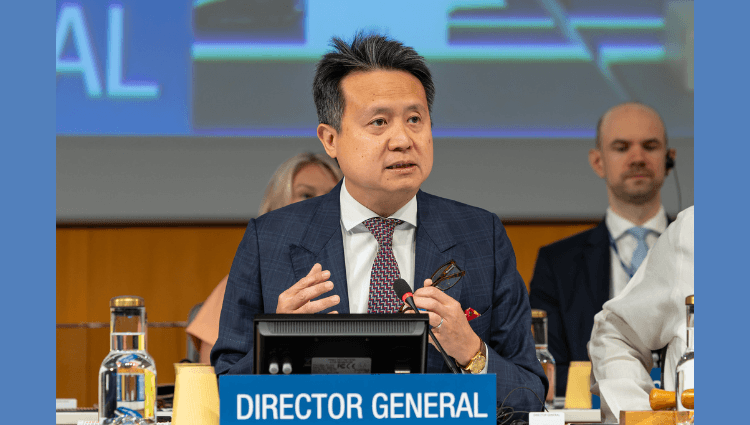
During his opening address, Daren Tang also presented other significant results achieved by WIPO in numerous areas, ranging from financial management and support for Member States to the development of new technological tools and intellectual property training programmes, which have been successfully used by more than one million participants.
Speaking about the future, the Director General presented four strategic visions for the next six-year term.
The first is for intellectual property to become an integral part of the life and work of all entrepreneurs, rather than a subject confined solely to specialists.
The second is the development of a truly global intellectual property system in which both developed and developing countries participate equally and benefit from the system.
The third vision relates to preparing the international intellectual property system for the age of artificial intelligence through the establishment of the Global Forum on IP and AI. The Director General spoke about the need to develop artificial intelligence tools for national intellectual property offices, strengthen cooperation in this area and provide Member States with technical support in this regard.
The fourth vision is for WIPO to continue developing as a modern, efficient, digitally advanced and trusted organization capable of delivering concrete results at the global level.
At the conclusion of his address, Director General Daren Tang emphasized that the purpose of intellectual property extends far beyond its legal dimension. As he pointed out, intellectual property is inseparably linked to human creativity and innovation and serves as a means of strengthening international cooperation. He expressed his confidence that WIPO, together with its Member States, would continue building an effective international intellectual property system that fosters innovation, creativity and economic development for the benefit of the entire world.
The full opening address by the WIPO Director General is available HERE.
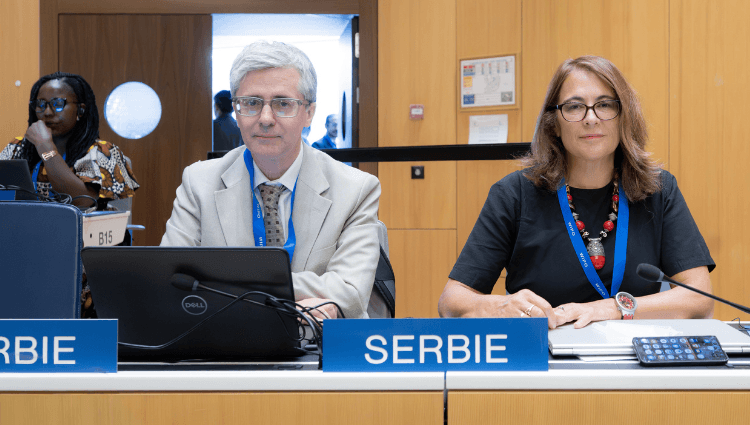
Under the next item on the agenda, statements were delivered first by representatives of regional groups, followed by ministers of Member States and statements by countries in their national capacity. On behalf of the delegation of the Republic of Serbia, Mr. Vladimir Marić, Director of the Intellectual Property Office, delivered the following statement:
“Mr. Chair, Mr. Director General, Excellencies, distinguished delegates, ladies and gentlemen,
The Republic of Serbia congratulates Director General Daren Tang on his reappointment and wishes him every success in his future work.
Within the framework of the EU4IM project, with the support of the OECD, Serbia is preparing a study on the impact of counterfeiting and piracy on our economy. Our key question is: what is the actual damage suffered by Serbia as a result of these illegal activities, and which sectors of our economy are most affected?
I am pleased to inform you that the National Assembly of the Republic of Serbia recently ratified the Law on the Geneva Act of the Lisbon Agreement. The protection of geographical indications may not constitute the foundation of every country’s macroeconomy, but in every country it can help farmers achieve better livelihoods in their rural communities.
Serbia attaches great importance to the system of collective management of copyright and related rights. Today, almost all right holders in Serbia are organized through eight specialized collective management organizations, the most recently established of which represents visual artists. According to the CISAC report, the total revenue generated by all collective management organizations in Serbia increased by 9.2% in 2024, ranking Serbia 44th in the world in terms of total collections — a good result for a market of our size.
Our Intellectual Property Office is also strengthening its capacities by relying on artificial intelligence. In patent examination procedures, the Office uses ANSERA, a system developed by the European Patent Office, while an AI-based trademark examination system will also be introduced soon.
For many years, Serbia has been building a strong intellectual property system, with significant support from WIPO. I would like to thank Director General Daren Tang and his team for their support to date and express my confidence that we will continue our successful cooperation in the years to come.”
The video recording of Director Marić’s address is available HERE.
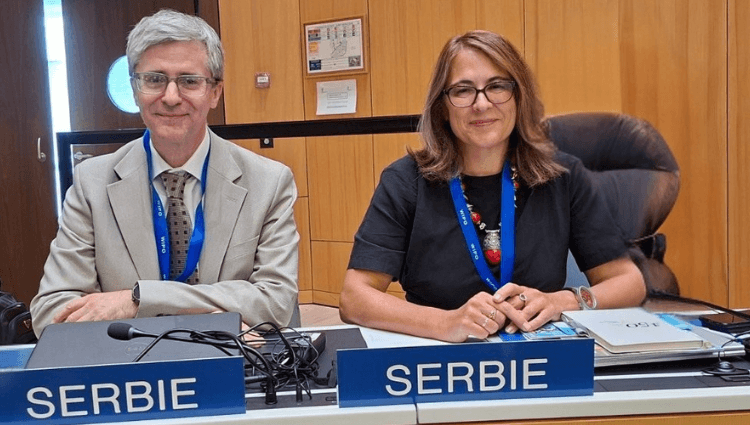
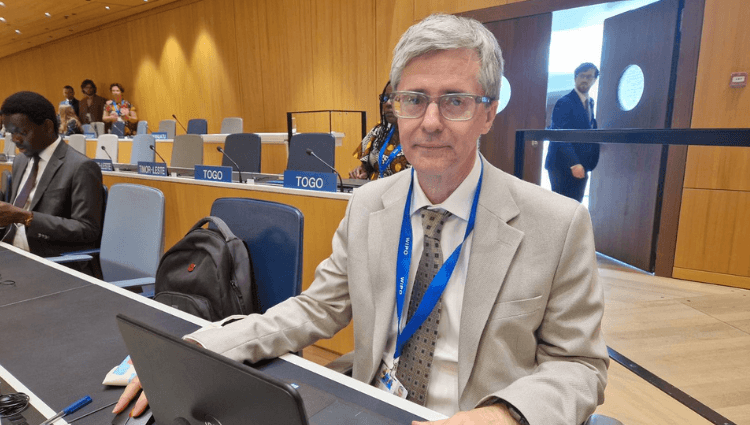
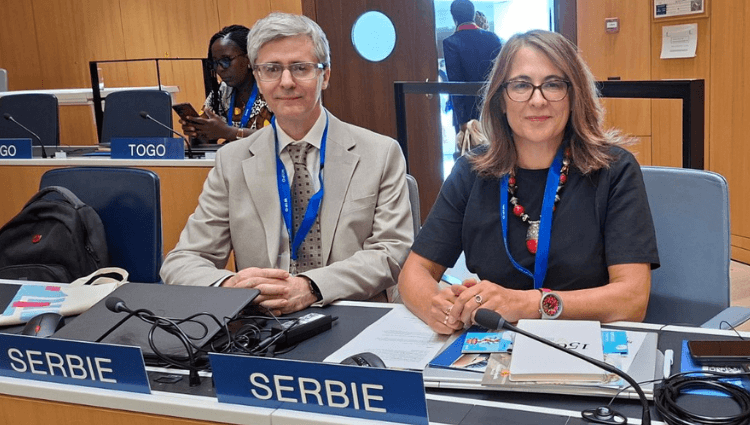
At the 68th Series of Meetings of the WIPO Assemblies, the Republic of Serbia is represented by Director Vladimir Marić, Assistant Director of the Intellectual Property Office Daniela Zlatić Šutić, as well as representatives of the Permanent Mission of the Republic of Serbia to the United Nations and other international organizations in Geneva.
Copyright Notice:
The photographs used in this news item were sourced from WIPO’s Flickr account.