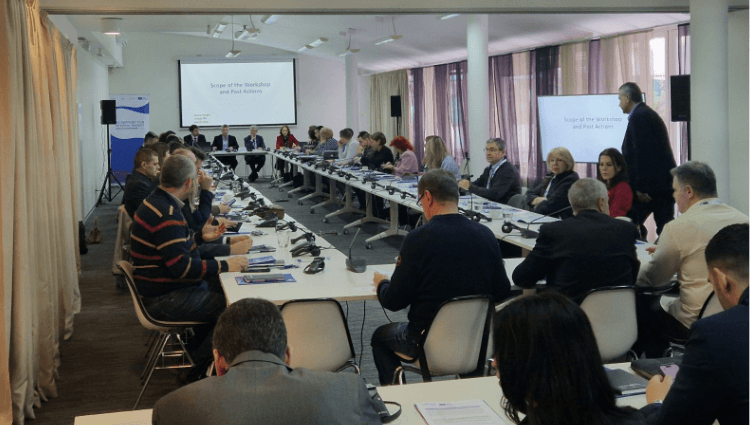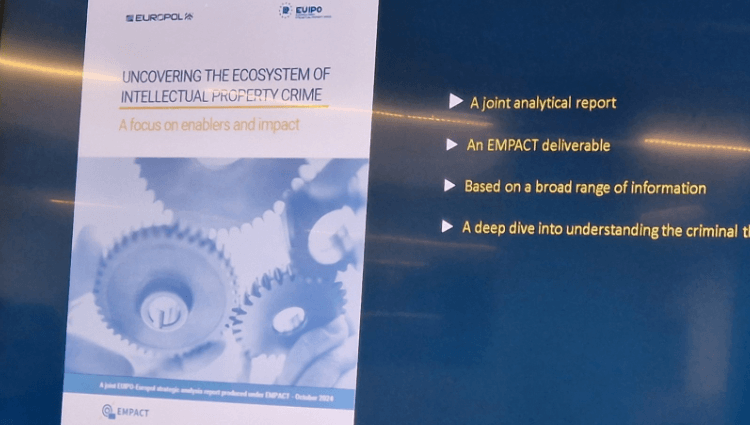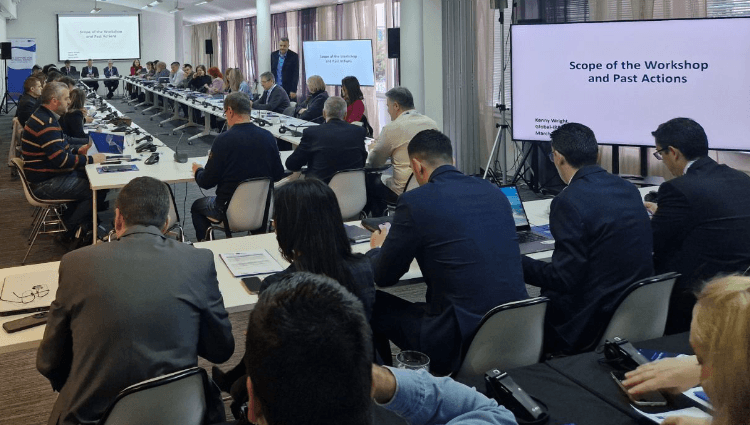



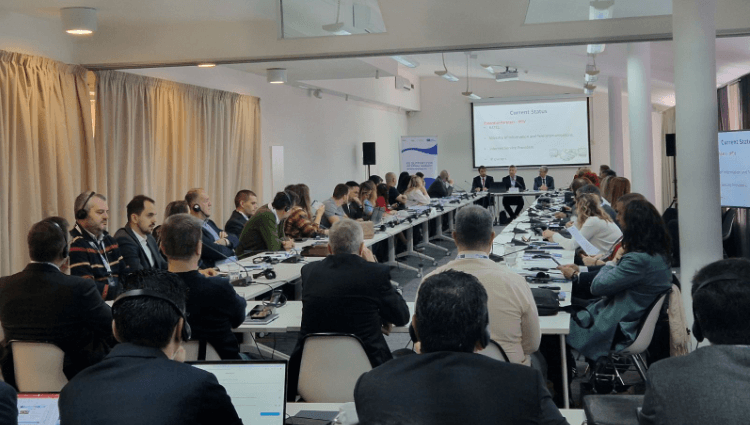
A three-day workshop entitled Strengthening Law Enforcement Capacity: OSINT and Forensic Tools and International Cooperation was held in Belgrade from 10 to 12 March 2026, with the support of the European Union project EU Support for the Internal Market.
The workshop was opened by Vladimir Marić, Director of the Intellectual Property Office, who highlighted the importance of strengthening institutional cooperation and continuously improving the knowledge and tools used in combating intellectual property rights infringements, particularly in the digital environment.
The speakers at the workshop were distinguished international experts in the field of investigating intellectual property rights infringements in the online environment, from the Spanish National Police, Interpol, Europol, the Council of Europe, as well as other international institutions and organisations involved in combating these forms of crime.
The event was intended to strengthen the capacities of the authorities participating in the work of the Coordination Body for the Efficient Enforcement of Intellectual Property Rights. The workshop was attended by representatives of the Ministry of the Interior, the Customs Administration, the Market Inspection Sector of the Ministry of Domestic and Foreign Trade, the Sanitary Inspection, the Pharmaceutical and Medical Devices Inspection, courts, public prosecutors’ offices, the Medicines and Medical Devices Agency, the Intellectual Property Office, and representatives of rights holders.
During the three-day programme, participants addressed current challenges in the field of intellectual property rights protection, with a particular focus on:
-
IPTV piracy and the protection of digital content;
-
combating the trade in counterfeit medicines and supplements;
-
the application of OSINT (Open Source Intelligence) methods and forensic tools in investigations.
Particular emphasis was placed on investigating intellectual property rights infringements in the online environment, the use of modern analytical and forensic tools, as well as the importance of international cooperation and information exchange. The importance of establishing direct contacts between domestic and foreign institutions was also underlined, as this is crucial for the effective detection and suppression of intellectual property rights infringements in the global digital environment.